technology live smart toolmilk helps farms collect real-time herd data. The platform uses sensors and cloud services to log milk yield, feed use, and cow activity. It sends alerts when cows show health declines. Managers get clear dashboards and action steps. The system reduces guesswork and saves labor. This introduction explains key ideas and sets expectations for the deeper sections below.
Key Takeaways
- ToolMilk Live Smart leverages sensors and AI technology to collect and analyze real-time herd data, helping modern dairy farms improve milk yield and animal health.
- The platform integrates seamlessly with existing farm equipment, reducing upgrade costs while automating routine monitoring tasks to save labor and cut veterinary expenses.
- Farm managers receive clear dashboards and actionable alerts, enabling faster decisions that improve milk quality and detect health issues like mastitis early.
- Core technologies such as IoT gateways and edge computing ensure reliable data transmission and immediate local alerts for urgent situations.
- Implementation includes assessment, pilot, and full rollout phases with ongoing support, while robust data security measures protect farm information.
- Tracking ROI involves monitoring yield increases and veterinary cost reductions, demonstrating measurable benefits from adopting ToolMilk Live Smart.
What ToolMilk Live Smart Is And Why It Matters To Modern Dairy Operations
ToolMilk Live Smart is a software and hardware package. It links milking systems, wearable sensors, and barn gateways. The platform collects milk volume, temperature, somatic cell counts, and activity data. It aggregates data into daily reports. Farm managers review trends and make faster decisions.
The product targets mid-size and large dairy farms. It reduces labor by automating routine checks. It lowers veterinary costs by flagging early signs of mastitis and lameness. It also improves milk quality by tracking somatic cell counts per cow.
ToolMilk Live Smart integrates with existing farm equipment. It supports common milking parlors, feed pushers, and milking robots. This lowers upgrade costs and speeds deployment. The vendor offers training and starter kits. The kits include sensors, tags, gateways, and an initial subscription.
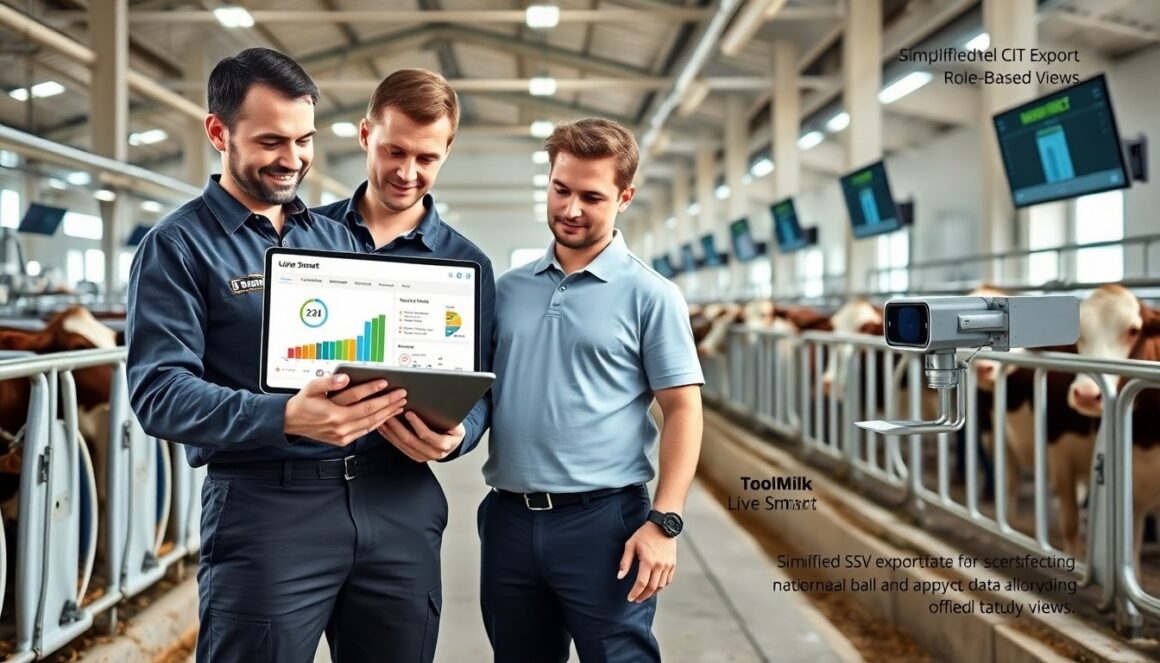
The system provides measurable benefits. Farms see increases in yield per cow and reductions in antibiotic use. Managers view cow-level and herd-level dashboards. They set targets and get weekly summaries. The platform supports role-based access. Veterinarians, herd managers, and owners see different views.
Adoption grows because data drives clear actions. ToolMilk Live Smart converts raw signals into steps. For example, it can assign cows to observation pens when the system detects a sustained drop in yield. It can recommend feed changes when activity and milk fat shift together.
The platform emphasizes simple reporting. It sends SMS and app notifications for high-priority issues. It also exports CSV files for farm accountants. The design focuses on quick understanding and immediate action. This approach helps teams act on data rather than puzzle over it.
Core Technologies Powering ToolMilk Live Smart: Sensors, IoT, AI, And Edge Computing
ToolMilk Live Smart relies on four core technologies. These technologies collect, transmit, analyze, and act on farm data.
Sensors. ToolMilk Live Smart uses milk meters, temperature probes, and motion tags. Each sensor records a single metric. The system timestamps every reading. Sensors minimize manual entry and reduce errors.
IoT gateways. Gateways sit in barns and relay sensor packets to the cloud. Gateways batch data and compress it. They also provide local dashboards for staff. Gateways keep the system running when internet links slow.
AI models. The platform applies AI to detect anomalies. Models learn baseline patterns per cow. They flag deviations such as lower yield or irregular feeding. AI also ranks alerts by likely severity. This helps staff prioritize tasks.
Edge computing. ToolMilk Live Smart runs some models at the gateway. Edge models handle urgent alerts such as sudden temperature spikes. Gateways issue local alarms faster than cloud-only systems. This reduces risk for time-sensitive events.
Data fusion. The platform combines milk, activity, and feed data. It correlates feed changes with milk composition. It links activity drops with potential lameness. This fusion gives clear, actionable insight.
User interfaces. The system shows simple dashboards on web and mobile. Dashboards highlight cows that need attention. Reports use clear language and short action items. The interface limits clicks and shows next steps.
Ecosystem APIs. ToolMilk Live Smart exposes APIs for third-party tools. Farms connect accounting software, genetics tools, and automated feeders. APIs let farms extend the system without major rewrites.
The technology suite enables continuous improvement. AI models improve as farms add data. Sensors become more accurate as teams calibrate them. The platform supports versioned updates to preserve farm workflows and reduce disruptions.
Implementation Steps, Data Security, And Measuring ROI For ToolMilk Live Smart
Install assessment. A technician audits barn layout and network reach. The audit lists sensor types and counts. It also identifies gateway locations.
Pilot deployment. Farms install sensors on a subset of cows. The pilot runs for four to eight weeks. The vendor tunes models to the herd and feed patterns. Staff train on the dashboard and notification flow.
Full rollout. Farms deploy the remainder of sensors and connect gateways. The vendor schedules check-ins at 30 and 90 days. The team adjusts alert thresholds and adds user accounts.
Data security. ToolMilk Live Smart encrypts data in transit and at rest. The platform supports two-factor authentication. It offers role-based permissions and audit logs. The vendor provides data export and deletion tools for compliance.
Measuring ROI. Farms track yield per cow, veterinary costs, and labor hours. They compare three months before and after full rollout. Typical ROI shows reduced illness episodes and a small lift in average yield. Vendors also report fewer emergency vet calls and lower drug spend.
Operational tips. Farms assign a data lead to review alerts daily. They keep a simple action log for each alert. They also review monthly trend reports with the herd manager.
ToolMilk Live Smart uses clear tech to deliver clear results. The system reduces manual checks, improves early detection, and gives teams direct steps they can follow.